When we first arrived in Bali, we made a decision that felt simple at the time: one day, we would climb the island’s highest volcano.
We knew it would be challenging. We just didn’t know what that actually meant yet.
About the volcano
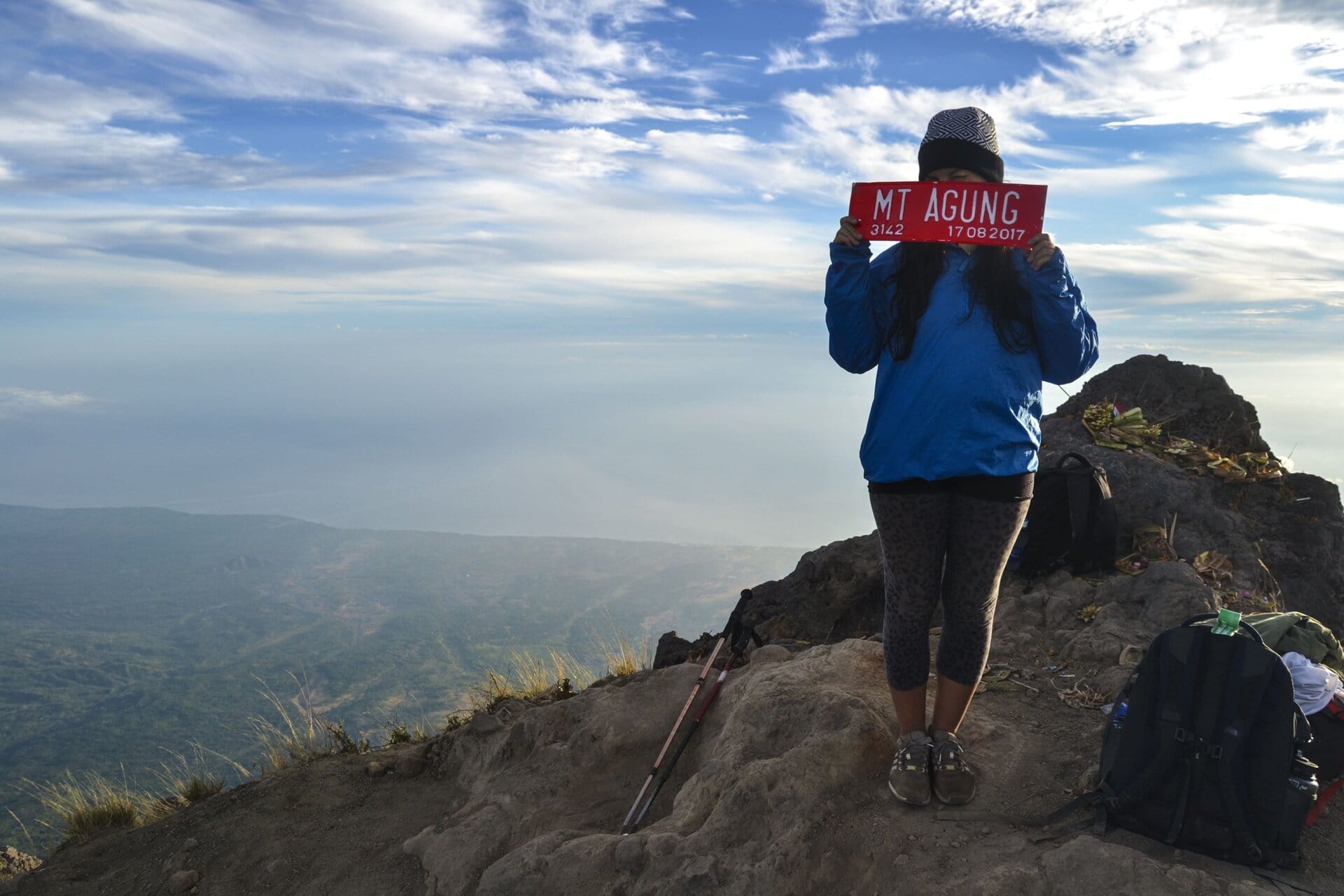
Mount Agung rises 3,142 meters above the island and is still an active volcano. Its last major eruption in 1963 caused devastating damage and took thousands of lives. But beyond its physical presence, it holds deep spiritual significance. For the Balinese, this is the most sacred place on the island — the home of the gods. You don’t just climb Agung. You enter something much bigger.
Preparation (or the lack of it)
We planned our hike for the dry season, knowing that weather conditions can change quickly and that climbing in the rain isn’t allowed. Still, even in June, we weren’t entirely sure what we would get. Our guide — recommended in a Facebook group — confidently promised clear skies. We chose to believe him.
Hiring a local guide is mandatory, and at first, we briefly questioned whether we really needed one. That thought disappeared within the first five minutes of the climb. The trail is unmarked, the terrain is unpredictable, and the entire ascent starts in complete darkness. Without a guide, we wouldn’t have even found the way — let alone reached the summit safely.
The reality check
We decided to take the longest route, starting from Pura Besakih. That meant around seven hours up and another seven hours down. When we arrived at midnight and realized what we had signed up for, the weight of that decision suddenly felt very real.
The way up
We started climbing around 12:30 AM, equipped with headlamps, layered clothing, water, and a mix of excitement and quiet doubt. The first hours were spent in complete darkness, following our guide along what barely felt like a path. In reality, it was often more like a dried riverbed — loose rocks, sand, roots, and steep sections where you had to use your hands as much as your feet.
From the very beginning, I was more focused on my physical limits than anything else. I had no real climbing experience, and despite a short-lived attempt to “train” before the hike, I wasn’t in great shape. I kept wondering if I would be able to make it. Matyi, on the other hand, was determined — once he sets his mind on something, he goes all the way. I wasn’t so sure about myself.
As we climbed higher, the physical strain became constant. Headaches, nausea, dizziness, burning legs — one low point followed another. At around 2,400 meters, I seriously considered stopping and waiting for the others. The darkness around me quickly changed my mind. A bit later, when our guide casually mentioned that we still had about three hours left, I felt my motivation slipping away. The summit didn’t feel closer — it felt like it was moving further away.
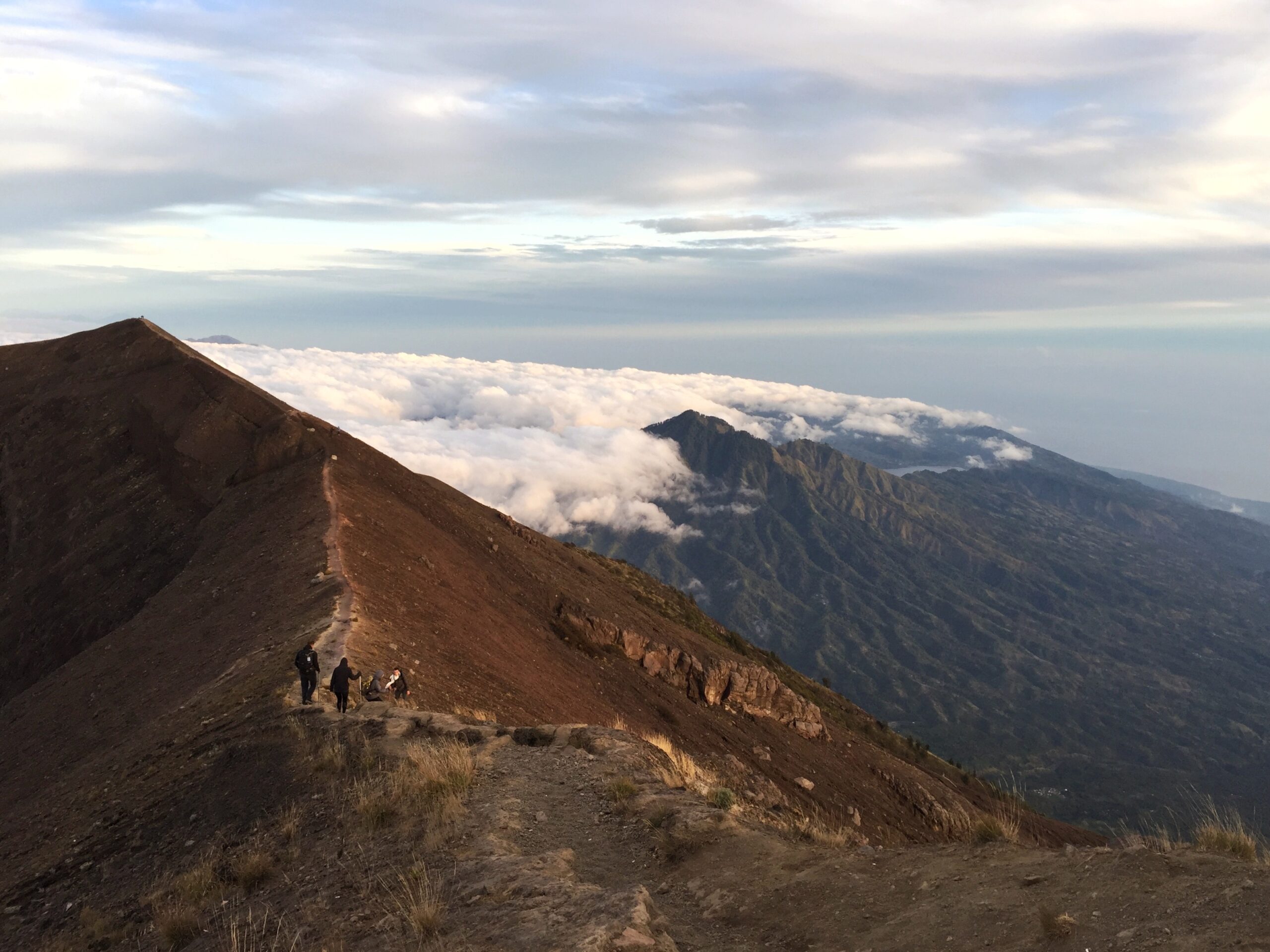
The last section was the most demanding. By then, there was no vegetation left, only volcanic rocks and loose gravel. The terrain was steep and unstable, sometimes requiring us to climb on all fours. The wind picked up, and our sweat-soaked clothes made the cold even harder to handle. Every step required focus. Every meter felt earned.
Above the clouds
After about six hours, we finally reached the summit. I was exhausted, cold, and very close to tears — but this time, for a different reason. The moment we arrived above the clouds, everything shifted. The struggle faded into the background, replaced by a quiet, overwhelming sense of relief and happiness.
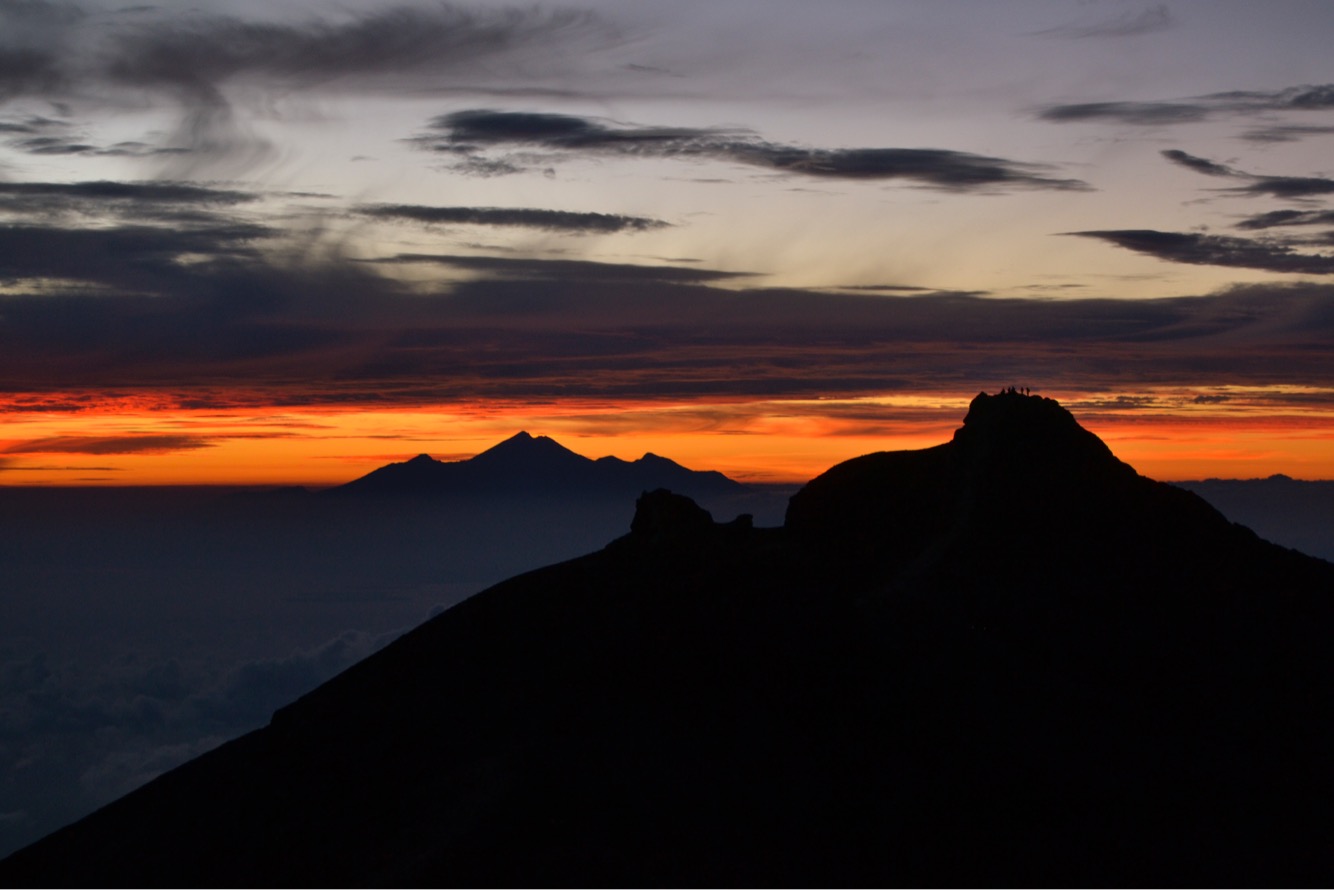
We waited for the sunrise in near-freezing temperatures, wrapped in whatever layers we had left. When the light finally appeared, it was one of those moments that stays with you. In the distance, we could see Mount Rinjani on Lombok and Mount Semeru on Java. Standing there, above the clouds, it truly felt like we had stepped into something sacred.